The Jaguar XK140 Archive
A reference for the XK140, 1954 to 1957 — identification, specification, buying, and a complete body-off restoration recorded in detail.
What the Jaguar XK was
Between 1948 and 1960 Jaguar built about thirty thousand XK sports cars in three model generations — the XK120, the XK140 and the XK150. All three used the same twin-overhead-camshaft six-cylinder engine, the first mass-produced engine of its type, which went on to win Le Mans five times and stayed in production for more than forty years.
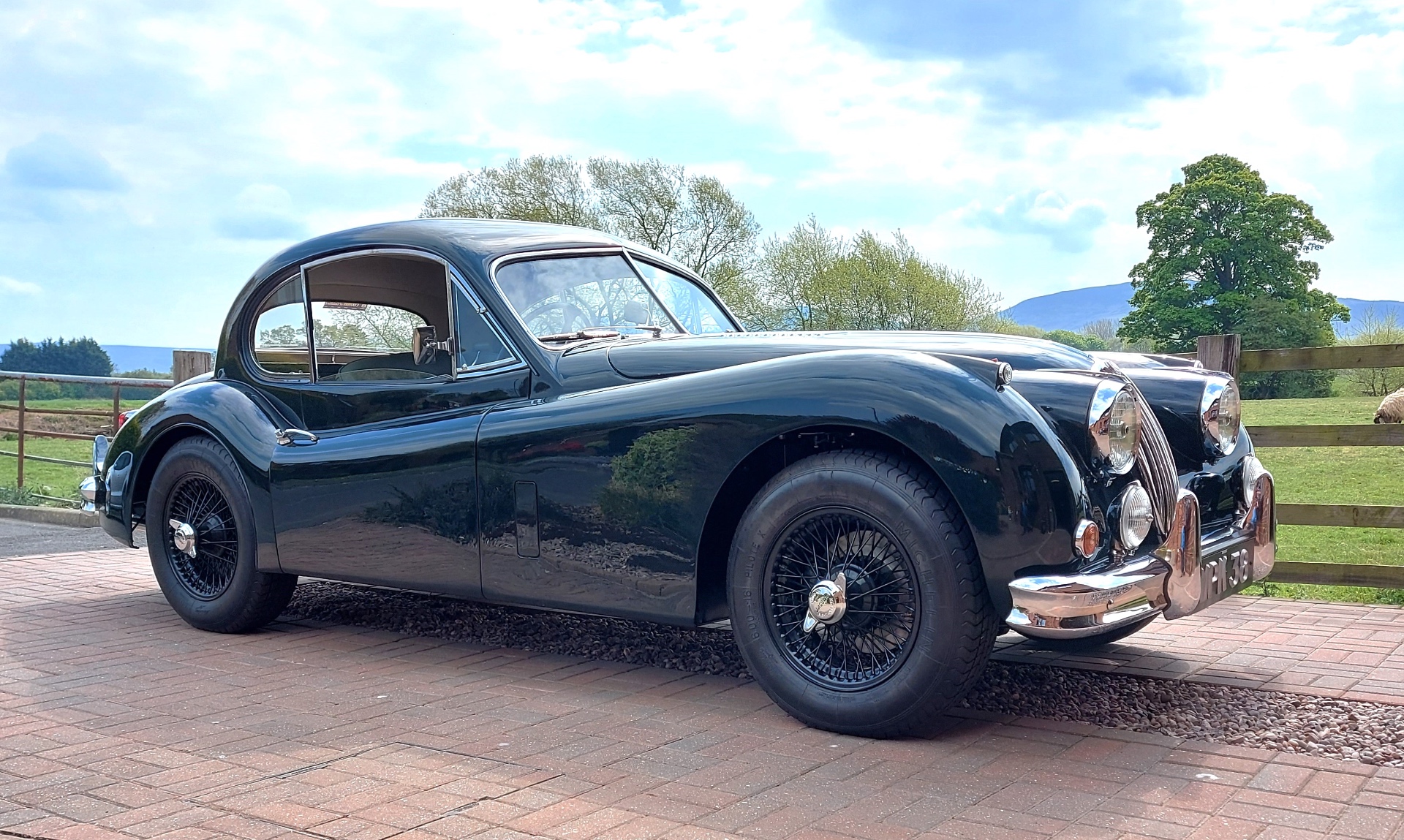
This archive is about one of them: a 1955 XK140 Fixed Head Coupe, registration WPK38, owned since 2007 by Bob Exelby and rebuilt by him twice.
Thinking of buying an XK at the Bangers & Cash Mathewsons auction?
Mathewsons in Thornton-le-Dale, North Yorkshire, is the family auction house featured in the TV series Bangers & Cash, and Jaguar XK sports cars appear in its sales from time to time. Our sister site thorntonledale.org reviews every car in each sale, with what to check on an XK120, XK140 or XK150, plus guides to the show, the Mathewson family and visiting the saleroom.
The three XK models compared
| Model | Years | Engine | Power (standard) | Power (special) | Gearbox | Brakes | Steering | Total built |
|---|---|---|---|---|---|---|---|---|
| XK120 | 1948 announced, 1949–1954 built | 3,442 cc, 83 × 106 mm | 160 bhp @ 5,000 rpm | SE 180 bhp @ 5,300; C-type head 210 bhp @ 5,750 | Moss four-speed, no overdrive, no automatic | Drums all round | Burman recirculating ball | 12,055 or 12,061 |
| XK140 | Announced October 1954, built to early 1957 | 3,442 cc, 83 × 106 mm | 190 bhp @ 5,500 rpm | SE/MC 210 bhp @ 5,750 with C-type head | Moss four-speed, overdrive optional, automatic from 1956 | Drums all round | Rack and pinion | 8,956 or 8,937 |
| XK150 | Launched May 1957, built to 1960 | 3,442 cc; 3.8 from October 1959, 3,781 cc | 210 bhp @ 5,500 in practice | 3.4 S 250 bhp; 3.8 220 bhp; 3.8 S 265 bhp | Moss four-speed, overdrive and automatic optional | Four-wheel Dunlop discs from launch | Rack and pinion | 9,385 or 9,382 |
What changed, model to model
XK120 to XK140
Rack-and-pinion steering in place of the XK120's Burman recirculating ball, which is the change an enthusiast names first. The engine, bulkhead and dash all moved forward, gaining three inches of legroom and occasional rear seats in the closed cars. 190 bhp standard against 160. Telescopic rear dampers in place of lever-arm, the front already being telescopic; stiffer torsion bars; full-width bumpers with overriders in place of the XK120's separate bumperettes; and overdrive on the options list.
XK140 to XK150
Four-wheel Dunlop disc brakes, servo-assisted, from launch. A one-piece curved windscreen in place of the split screen, a wider body and a raised wing line. Wind-up windows on the roadster in place of sidescreens. Later, the 250 bhp 3.4 S, the 3.8 and the 265 bhp 3.8 S.
What stayed the same
The 3,442 cc twin-cam six, 83 by 106 mm, through all three generations, and the Moss four-speed gearbox with synchromesh on the top three ratios only.
The XK140 in figures
- 8,956 built, 1954 to 1957
- 74 right-hand-drive roadsters, of which 45 sold to home-market customers
- 190 bhp standard, 210 bhp with the C-type head
- £1,830 7s 11d — the fixed head coupe's home-market price, about £68,000 today by the Retail Prices Index
- 121 to 125 mph on period road tests
The worked example: WPK38
One 1955 Fixed Head Coupe, owned since 2007 and rebuilt twice. Where this archive says how a job goes, this is the car it went on.
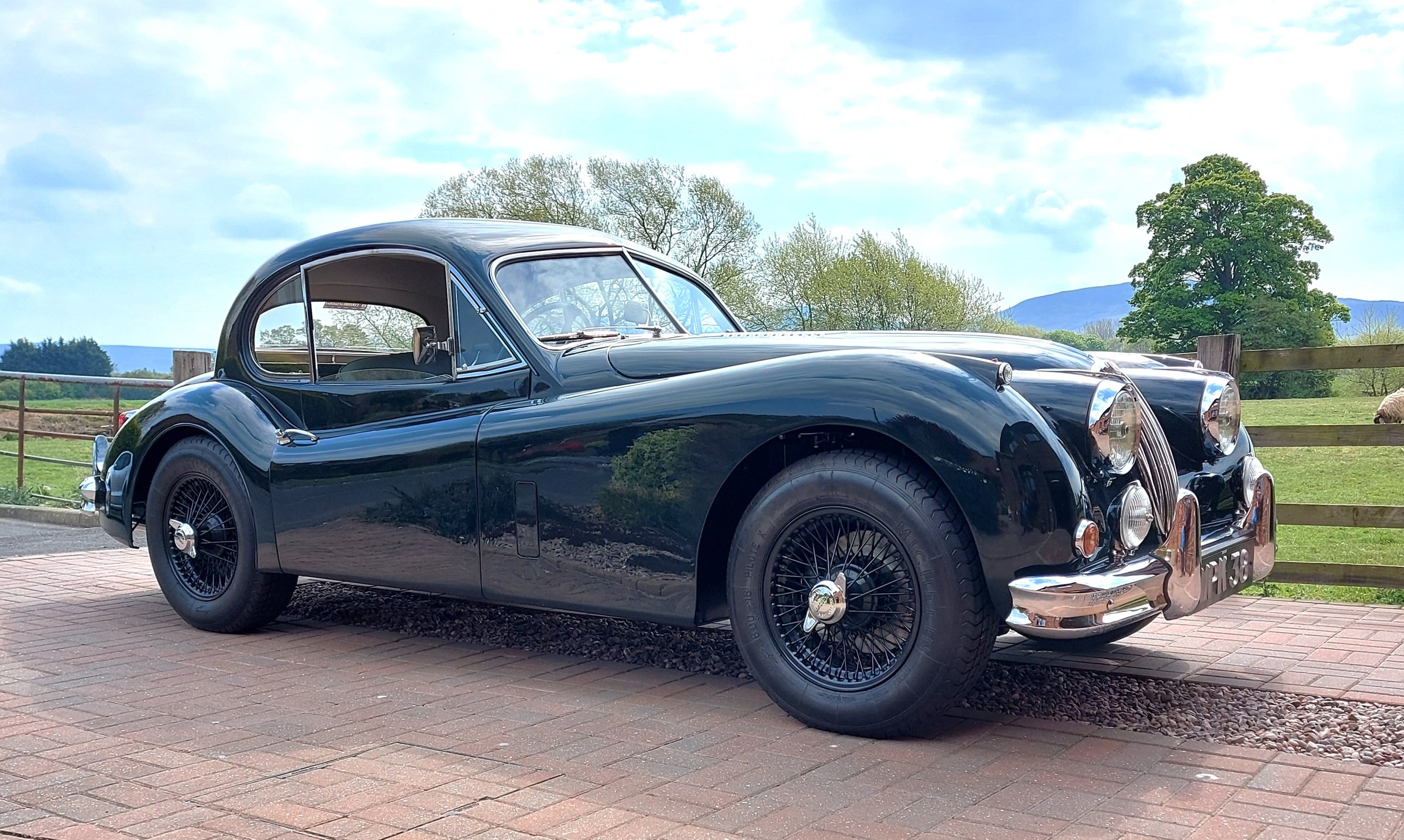
| Model | Jaguar XK140 Fixed Head Coupe |
|---|---|
| Chassis | 804053 D/N |
| Body | J4122 |
| Engine | G 2909-8 |
| Gearbox | JLE28043 (Moss four-speed with overdrive) — now a Tremec T5 |
| First registered | 14 April 1955 (log book issued 7 April) |
| Supplying dealer | Coombs of Guildford |
| Colour | British Racing Green, as delivered |
| Trim | Suede green — originally tan, the other factory option |
| Heritage certificate | 28737 |
Common questions
What is the difference between an XK120 and an XK140?
Rack-and-pinion steering, 190 bhp against 160, and the engine, bulkhead and dash moved forward to give occasional rear seats in the closed cars. The XK140 is also the easier car to sit in: three inches more cockpit.
Did the XK140 have disc brakes?
No. Every XK140 left the factory on drums, 12 inch Lockheed all round, enlarged and better cooled than the XK120's. Four-wheel discs arrived with the XK150 in May 1957.
How many XK140s were built?
The Jaguar Daimler Heritage Trust gives 8,956. Almost every other source gives 8,937. Both are published and we do not adjudicate between them.
What did an XK140 cost new?
The roadster was £1,598 8s 4d on the home market, the fixed head coupe £1,830 7s 11d — a figure the Jaguar Daimler Heritage Trust and The Autocar's road test of December 1955 agree on to the penny. The coupe's price is about £68,000 in today's money by the Retail Prices Index.
Was an automatic gearbox available?
Yes, a Borg-Warner DG250 three-speed from 1956 — the first Jaguar sports car offered with one. Overdrive was optional throughout.
What does SE mean on an XK140?
Special Equipment in Britain, M in the United States, and MC for the car with the C-type cylinder head and 210 bhp. The nomenclature catches people out.